Clean Substrate Can Be the Difference Between Safe Food and Costly Product Recalls
Lettuce, herbs and microgreens are among the healthiest foods we eat. At the same time, they are also among the most vulnerable. Unlike many other crops, they are typically consumed raw, without any heat treatment that could eliminate harmful bacteria. This means that even small amounts of Salmonella, E. coli or Listeria can have serious consequences—not only for consumers but also for growers and food retailers.
In recent years, numerous recalls of lettuce, leafy greens, sprouts and microgreens have been linked to these pathogens. In Canada, organic microgreens were recalled after E. coli was detected. In Ireland, spinach and mixed leaf products were withdrawn from the market due to Listeria monocytogenes. In the United Kingdom, a major E. coli outbreak linked to lettuce resulted in widespread product recalls, while in the United States a Listeria outbreak associated with packaged salads led to multiple fatalities.
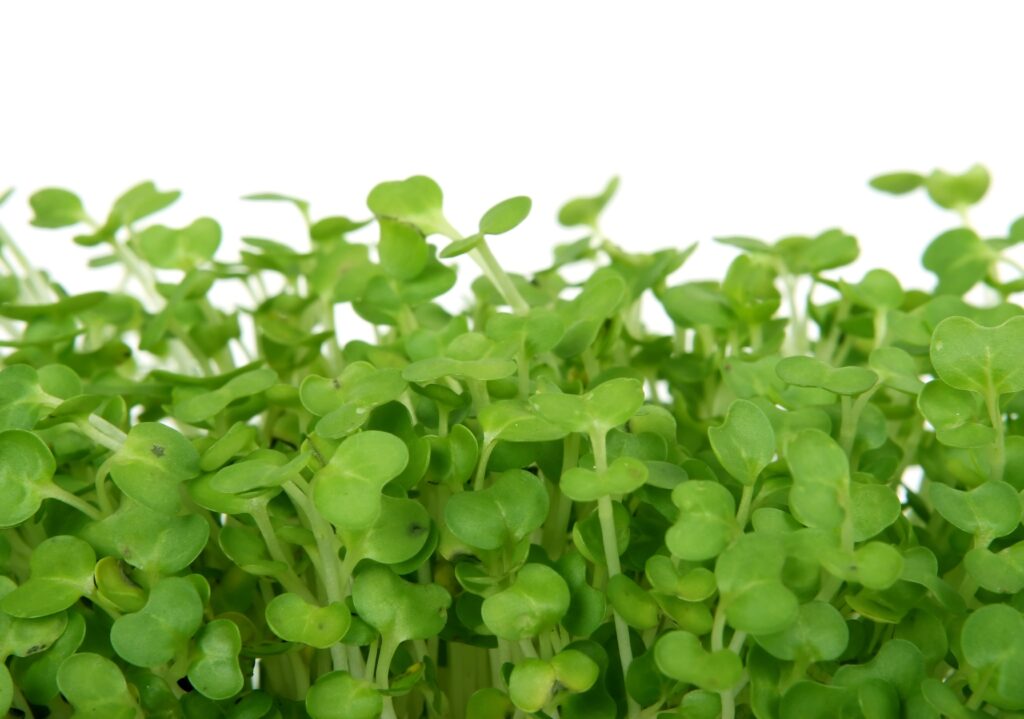
You can read more about some of these incidents here:
- Food Safety News – Microgreens recalled in Canada because of E. coli: https://www.foodsafetynews.com/2026/05/microgreens-being-recalled-in-canada-because-of-e-coli/
- Food Safety Authority of Ireland – Recall of various branded spinach and mixed leaves: https://www.fsai.ie/news-and-alerts/food-alerts/recall-of-various-branded-spinach-and-mixed-leaves
- The Guardian – UK E. coli outbreak linked to lettuce: https://www.theguardian.com/world/2024/jun/20/number-hospitalised-by-e-coli-reaches-86-as-uk-lettuce-outbreak-grows
- U.S. Food and Drug Administration – Listeria outbreak linked to Dole packaged salads: https://www.fda.gov/food/outbreaks-foodborne-illness/outbreak-investigation-listeria-monocytogenes-dole-packaged-salad-december-2021
Clean Growing Media Is One of the Most Important Barriers Against Contamination
Foodborne outbreaks rarely have a single cause. Seeds, irrigation water, equipment, handling and the production environment can all contribute to contamination. However, one factor is often overlooked: the growing substrate itself.
Contaminated substrate can act as a reservoir for harmful microorganisms. In the production of lettuce, herbs and microgreens—where crops are harvested within weeks and consumed fresh—it is essential to minimise biological risks before the seeds are even sown.
For growers committed to the highest standards of food safety, good hygiene alone is not enough. It starts with using a growing medium that is demonstrably free from harmful biological contaminants.
Why Vertical Farms Around the World Are Contacting SoilSteam
SoilSteam originally developed its steam technology to enable the safe reuse of biologically contaminated soil and horticultural substrates. Through years of research, including collaborations with leading research institutions, the technology has been shown to effectively eliminate a wide range of plant pathogens and microorganisms while maintaining crop performance.
Today, we are seeing a new trend.
An increasing number of vertical farms, lettuce growers and microgreens producers are contacting SoilSteam—not because they want to recycle their substrate, but because they want to ensure that new substrate is biologically clean before production begins.
“Our original goal was to develop technology that allows contaminated soil and growing media to be safely reused. Today, we are seeing growing interest from producers who want our help to ensure that even brand-new substrate is biologically clean before it enters production. That is incredibly inspiring for us. In our view, the only reliable way to guarantee a biologically clean growing medium is to treat it using equipment that independent third-party research has demonstrated can sterilise the substrate,” says Hans Kristian Westrum, Sales Director at SoilSteam.
An Investment in Food Safety
Product recalls are expensive. Beyond the immediate financial losses, they can severely damage customer confidence, retailer relationships and brand reputation. For producers of lettuce, herbs and microgreens, preventing contamination is almost always far less costly than dealing with the consequences of a recall.
At SoilSteam, we believe the future of greenhouse and vertical farming should be built on three fundamental principles:
- A biologically clean growing medium.
- Safe and sustainable substrate reuse.
- Lower carbon emissions without compromising food safety.
As food safety standards continue to tighten around the world, we believe clean substrate will become a new benchmark for professional horticulture. We are proud that SoilSteam’s technology can help growers produce safer food while contributing to a more sustainable and circular agricultural industry.