Soil Steaming vs Soil Washing – Which Method Works for Invasive Species and Plant Pathogens?
The treatment and reuse of excavated soil is becoming increasingly important as construction projects, infrastructure development, and environmental regulations move toward circular resource management.
However, soil is often contaminated with chemicals, invasive plant species, seeds, roots, and plant pathogens. If this soil is reused without proper treatment, it can unintentionally spread invasive species to new areas.
Two technologies are sometimes mentioned when treating contaminated soil: soil washing and SoilSteaming.
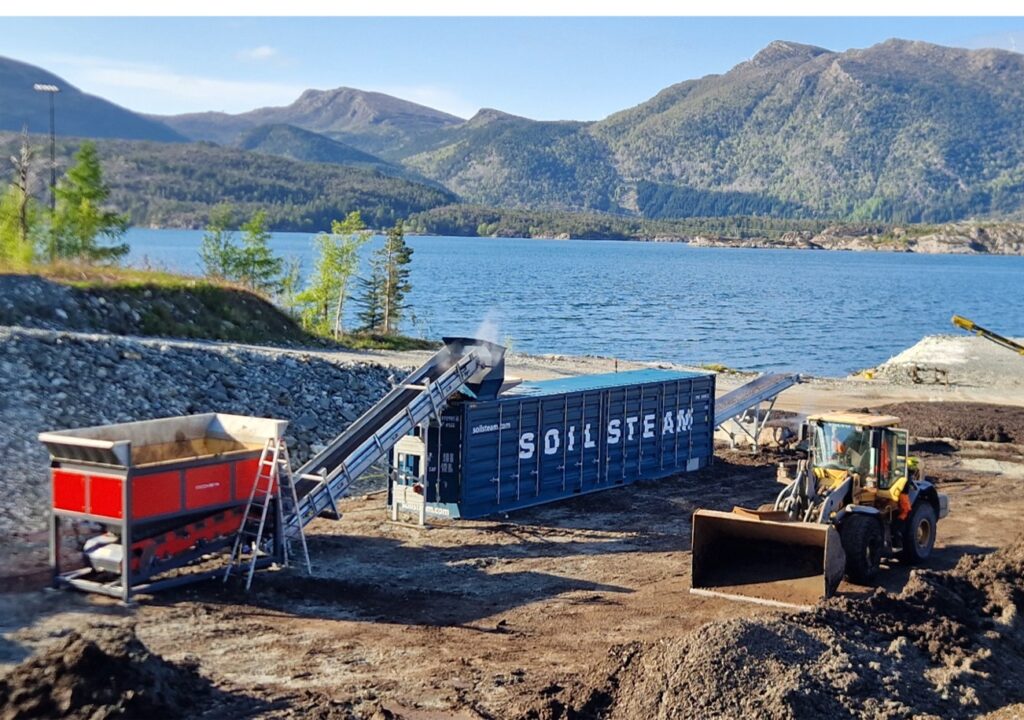
While both methods process soil, they serve very different purposes — and only one of them is effective when dealing with biological contamination such as invasive plant seeds and plant pests.
What is Soil Washing?
Soil washing is a remediation technology designed to remove chemical contamination from soil.
It is commonly used to treat soil polluted with:
- heavy metals
- petroleum hydrocarbons
- industrial pollutants
- contaminated fine particles
The process separates soil into different particle sizes and washes the soil with water and sometimes chemical additives. Many contaminants bind to the smallest soil particles (silt and clay), which are separated from the larger mineral fractions.
Typical soil washing steps include:
- Excavation of contaminated soil
- Screening and separation of soil fractions
- Washing with water or chemical solutions
- Separation of contaminated fines from reusable soil
The cleaned mineral fraction can then be reused in construction projects.
Why Soil Washing Does Not Work for Invasive Species
While soil washing can remove chemical contaminants, it is not designed to eliminate living organisms.
When soil contains biological contamination such as invasive plants or plant pathogens, several problems occur.
Seeds survive the washing process
Many invasive plants produce extremely resilient seeds that can survive:
- water exposure
- mechanical disturbance
- transport through treatment systems
These seeds can easily follow the soil through the washing process and remain viable afterward.
Roots and plant fragments can regenerate
Some invasive plants spread through root fragments or rhizomes. Even small pieces can regenerate and grow into new plants if they are not destroyed.
Soil washing may break the soil apart but does not reliably destroy plant material.
Risk of spreading invasive species
Because seeds and plant fragments can survive the process, soil washing may unintentionally spread invasive species rather than eliminate them.
For this reason, soil washing is generally not considered a reliable treatment method for soil contaminated with invasive plants or biological pests.
What is SoilSteaming?
SoilSteaming is a thermal soil treatment method that disinfects soil using heat.
Instead of separating contaminants from the soil, steam is used to raise the soil temperature to above 90°C.
At these temperatures, biological organisms cannot survive.
Soil steaming effectively eliminates:
- invasive plant seeds
- roots and rhizomes
- fungi
- bacteria
- nematodes
- insects and larvae
- soil-borne plant pathogens
The method has been widely used in horticulture, greenhouses, and plant nurseries to disinfect growing media and soil before planting.
How Heat Destroys Seeds and Plant Pathogens
Living organisms rely on proteins and cell structures that break down when exposed to high temperatures.
When soil temperatures exceed approximately 70–90°C, critical biological functions fail.
At these temperatures:
- seed viability is destroyed
- root tissue breaks down
- pathogens are inactivated
Unlike soil washing, which attempts to separate contaminants, soil steaming treats the entire soil volume.
This ensures that invasive species and plant pathogens are eliminated rather than redistributed.
SoilSteaming vs Soil Washing – Key Differences
| Feature | Soil Washing | SoilSteaming |
| Main purpose | Remove chemical contamination | Eliminate biological organisms |
| Treatment principle | Mechanical separation and washing | Thermal disinfection |
| Effect on invasive plant seeds | Seeds may survive | Seeds destroyed |
| Effect on root fragments | May survive | Inactivated |
| Effect on plant pathogens | Limited | Highly effective |
| Suitable for invasive species treatment | No | Yes |
Why Thermal Soil Treatment is Important for Invasive Species Control
The spread of invasive plants through soil transport is a growing challenge worldwide. Construction activities, infrastructure projects, and land development often move large volumes of soil between locations.
If soil containing invasive seeds or plant fragments is reused without proper treatment, new infestations can occur.
Effective soil treatment therefore requires technologies that destroy biological contamination rather than simply separating it.
Thermal soil treatment, such as SoilSteaming, provides a reliable way to eliminate invasive plant seeds, roots, and pathogens before soil is reused.
Soil washing and SoilSteaming are two very different soil treatment technologies.
- Soil washing is effective for removing chemical contaminants but does not destroy biological organisms.
- SoilSteaming disinfects soil using heat and eliminates invasive plant seeds, roots, and plant pathogens.
When soil is contaminated with invasive species or biological pests, SoilSteaming provides a far more reliable solution for safe soil reuse.